Colored Stones
Amethyst Jewelry: The Purple Stone That Has Always Had Presence
The discovery of large deposits in Brazil in the nineteenth century collapsed amethyst’s price from royal-level to accessible — but the finest Siberian-type deep purple with red flash still earns its position in high-end jewelry.
Color: Where the Real Distinction Lives
Deep Siberian vs. Commercial Pale and Everything Between
Amethyst is quartz — silicon dioxide — colored by iron and trace elements under irradiation. The color range runs from the faintest lilac that barely reads as purple through medium lavender and violet to the deep, saturated purple with red and blue flashes that the trade designates “Siberian” quality after the Russian deposits that historically produced the benchmark material. Brazilian deposits now produce the majority of commercial amethyst, and the range from those deposits spans the full quality spectrum from essentially colorless to occasionally fine deep material.
The practical distinction that matters for buyers is between the deep, consistently saturated, slightly reddish purple — sometimes described as “Deep Siberian,” meaning 75 to 80 percent saturation — and the commercial pale to medium material that makes up most of the volume. Fine deep amethyst looks completely different from pale amethyst, not just marginally different. The color is authoritative, holds its character under different light sources, and does not wash out at viewing angles away from the face-up position.
Color zoning is a common issue in amethyst — the iron distribution during crystal growth is often uneven, and many stones show alternating purple and pale zones visible through the table facet. Well-cut amethyst orients the rough to minimize visible zoning, showing consistent color face-up even when the crystal itself is zoned. Poorly cut stones, or rough cut to maximize weight, often show this zoning clearly. It is visible in the store and should be evaluated.
Origins Beyond Brazil
Uruguay, Zambia, and What They Offer
Uruguayan amethyst is typically darker and more saturated than Brazilian material, with a slightly more blue-purple character. Zambian amethyst is sometimes extremely deep — approaching the color of a dark iolite — with particular richness in the red secondary hue. Both origins produce smaller crystal sizes than Brazil, which is why large Uruguayan or Zambian stones are correspondingly more expensive. For buyers who want deep, saturated color, material from these origins often outperforms Brazilian production at the same price point.
The specific “Siberian” character — that deep reddish-purple with full saturation — was first established by material from the Ural Mountains of Russia and later from Siberian deposits. That material is now scarce commercially. Modern high-quality amethyst that achieves the same color character, regardless of geographic origin, earns the “Siberian” trade designation as a quality descriptor rather than a strict geographic one.
Durability and Setting Considerations
Quartz in Jewelry
Amethyst at 7 on the Mohs hardness scale is harder than tanzanite and opal but softer than sapphire, ruby, and spinel. It is durable enough for occasional wear rings and for pendant and earring applications. For a daily-wear engagement ring, quartz accumulates surface scratches from contact with harder minerals in common dust and grit, which means it will gradually lose its polish with constant wear. Periodic re-polishing addresses this, but buyers should understand the maintenance reality.
One property of amethyst that is worth knowing: prolonged exposure to strong sunlight can cause color fading. This is not a risk with normal wearing — the UV component of ambient light is not intense enough to cause meaningful fading in practical timescales. Direct, prolonged positioning in strong sunlight (in a display window, for example) over months can cause perceptible color loss. Store the stone away from extended direct light exposure.
Value and Pricing
What Fine Amethyst Actually Costs and Why
Commercial amethyst is one of the most affordable gemstones available — pale to medium material in standard sizes can be purchased at retail for under $20 per carat. Deep, well-cut material with strong saturation and minimal zoning runs $30 to $100 per carat in most sizes. Truly exceptional material — top Siberian-type color in large, well-cut stones above 20 carats — can reach several hundred dollars per carat, which remains a fraction of comparable sapphire prices. The accessibility is genuine and is the stone’s democratic appeal.
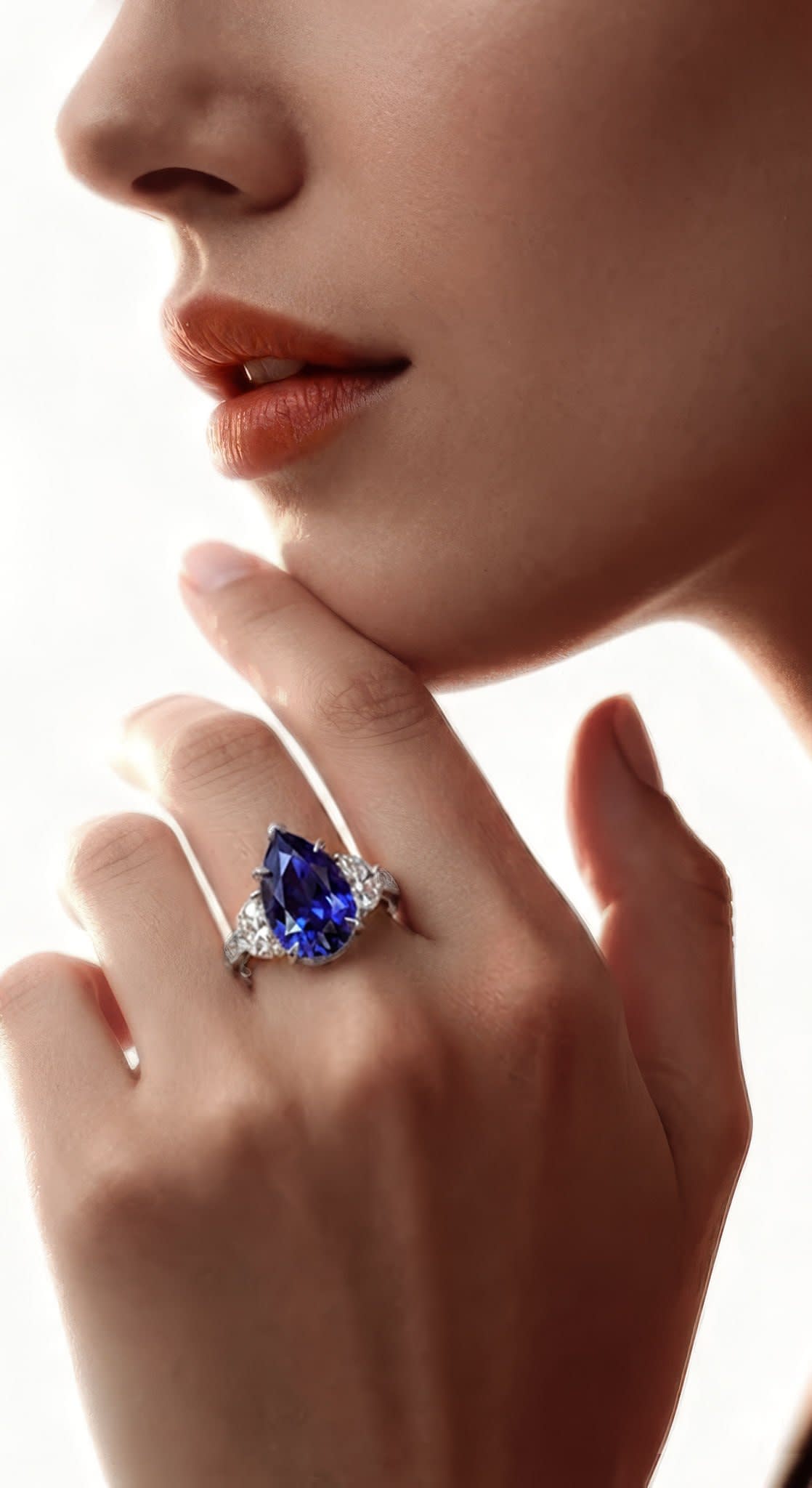
Where amethyst earns its keep in fine jewelry is not in the price of the stone itself but in the design context. A large, well-cut deep amethyst in a serious gold or platinum setting — surrounded by diamonds and executed with craftsmanship — produces a piece that commands attention and holds design value. The stone’s affordability allows larger sizes, bolder proportions, and more dramatic design expressions than would be practical with comparable sapphire prices.
What People
Ask Us
What is the best color of amethyst to look for? Deep purple with a slight red secondary hue — the “Siberian” quality designation — is the benchmark. In practical terms, look for a stone where the purple is saturated and consistent across the face of the stone, where there is no obvious zoning visible from the front, and where the stone holds its color under both daylight and incandescent light rather than fading to gray under one of them.
Is amethyst appropriate for an engagement ring? As an occasional-wear or special-occasion ring, absolutely. For a ring worn every day without removal, amethyst will show surface wear over time more quickly than corundum-based stones. The conversation to have with any client choosing amethyst for daily wear is about maintenance and realistic expectations about re-polishing periodically. It is a workable choice for the right person.
Can amethyst be heat-treated to improve its color? Heat treatment at certain temperatures actually bleaches amethyst to a pale yellow-orange that the trade sells as “citrine” or “prasiolite” (yellow-green). It does not improve purple color. The deep purple of fine amethyst is not enhanced by any accepted commercial treatment — you are buying the color as nature produced it. This is one category where treatment is not a meaningful variable.
Does green amethyst (prasiolite) belong to the same category? Prasiolite — also called “green amethyst,” though gemologically speaking it is ametrine or heat-treated amethyst — is a distinct product from purple amethyst. The green variety is produced by heat-treating certain Brazilian amethyst rough and is far less rare than naturally occurring prasiolite. It trades at lower prices than comparable purple material and has a different aesthetic market entirely.
What size amethyst works best in a center stone setting? Amethyst is available in very large sizes at accessible prices, which makes it a natural candidate for bold, statement center stones. Sizes from five to thirty carats are commercially available in fine quality. The stone’s color depth benefits from larger carat weights — a ten-carat deep amethyst shows more presence and color saturation than a two-carat stone of equal quality. This is one gem category where bigger is genuinely better and is financially achievable.
Continue Reading
- Aquamarine Jewelry: The March Birthstone Worth Knowing Well
- Blue Diamond Ring vs Blue Sapphire Ring
- Blue Diamond Rings
Explore the Bez Ambar colored stone collection.
Ready to start your own piece? Contact the studio for a private consultation.
Commission a Piece of Your Own
Every piece is designed and made in the Los Angeles atelier, from the first reading of the stone to the final pass of the setting wheel. Enquire to begin a commission.


